
01
Guided algorithm practice
Move through a structured ACLS learning flow without losing the bigger picture.
Hands On Heart turns complex resuscitation workflows into a calm, structured learning experience—made for deliberate practice, refreshers, and deeper understanding.

One-time purchase · Price varies by region
Educational tool only. Hands On Heart is not for use as an emergency-response system and does not replace professional medical training, certification, judgment, or advice. In a medical emergency, contact local emergency services and seek a doctor or other qualified medical professional.
Read safety termsBuilt for learningNot live emergency use
Available offlineStudy without a connection
Private by designNo account or data collection
Multilingual appLearn in your preferred language
Purposeful by design
Hands On Heart keeps the full practice flow visible while guiding your attention to the next concept—so every session feels focused, legible, and worth returning to.
Move through a structured ACLS learning flow without losing the bigger picture.
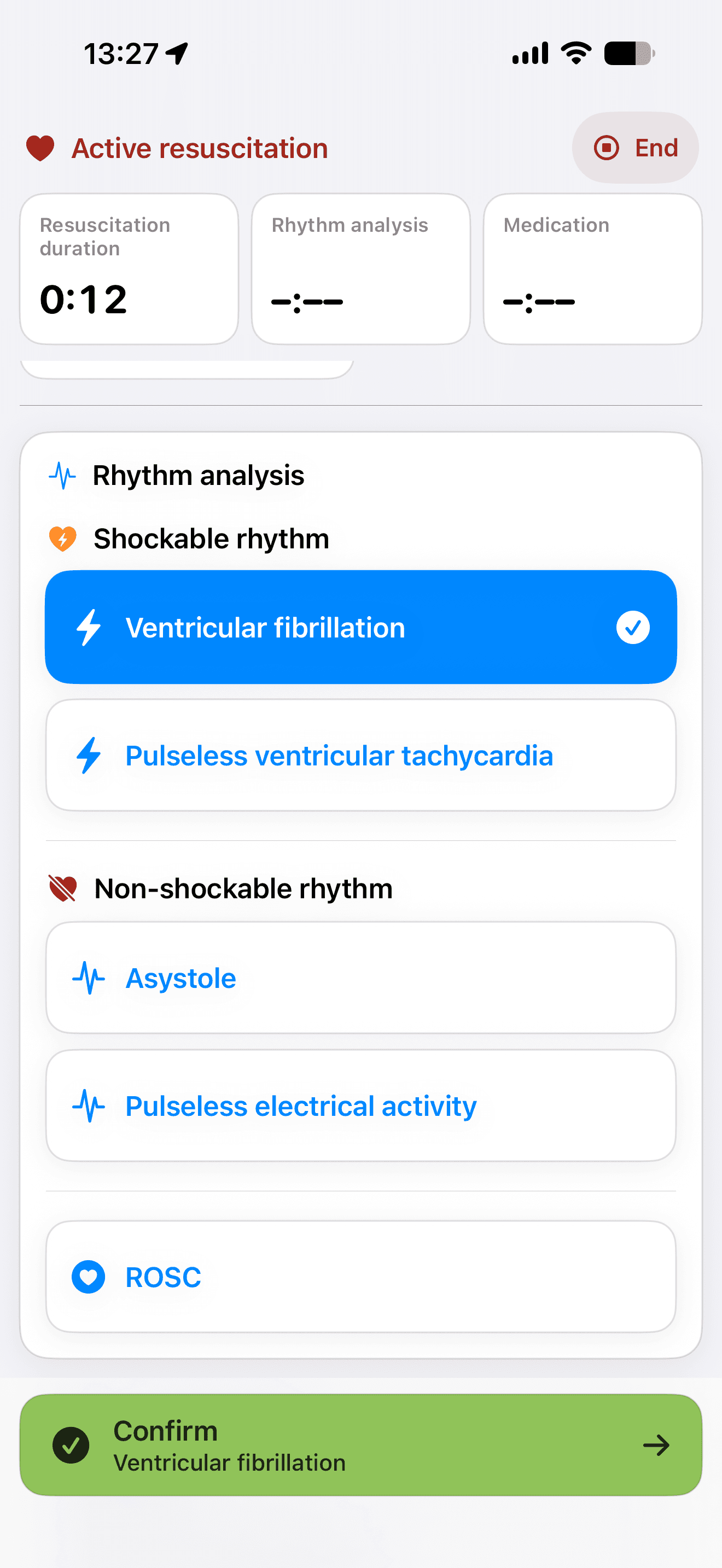
Study shockable and non-shockable pathways with clear, deliberate decisions.
Understand the cadence of rhythm analysis, medication, and the full practice session.
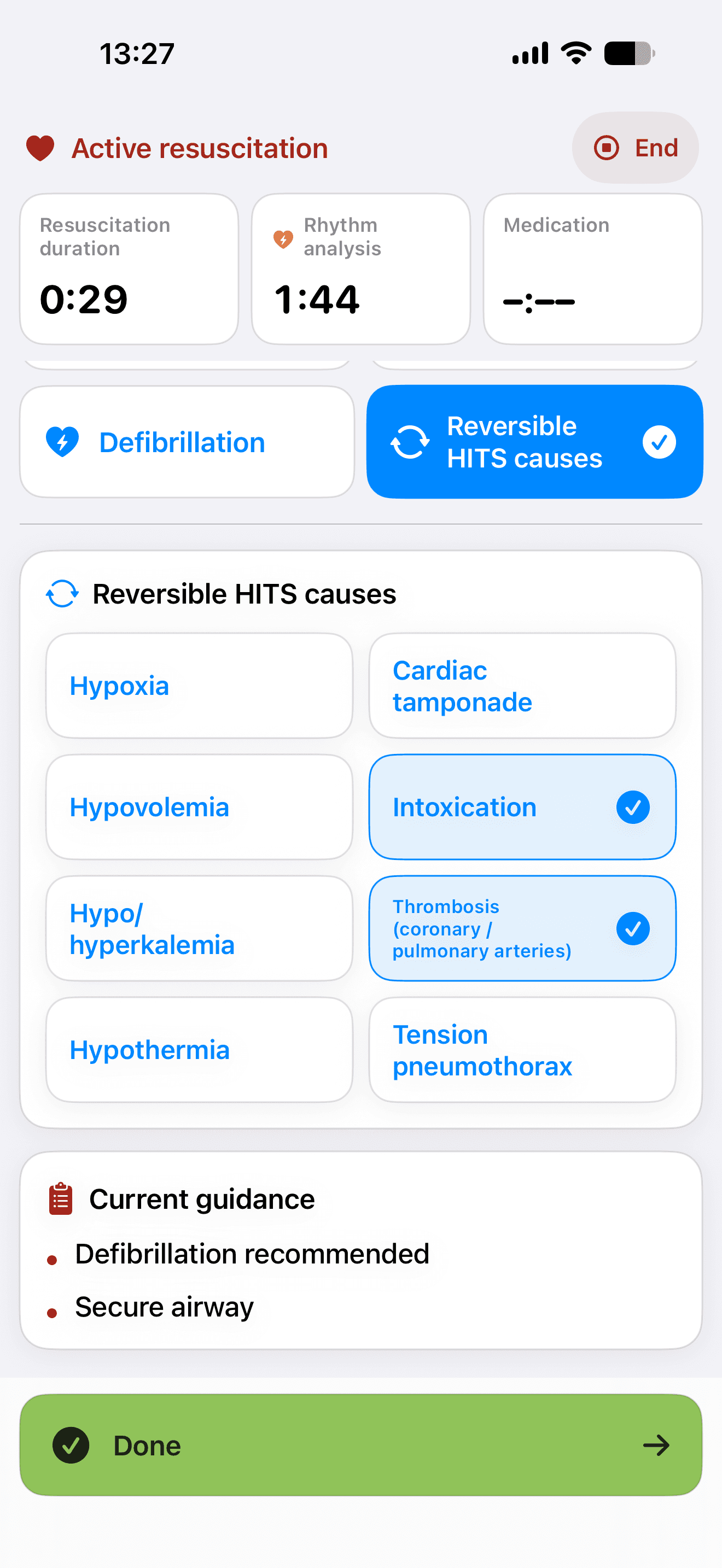
Revisit medications, defibrillation, reversible causes, and interventions in one flow.
Practice continuity by transferring a learning session between supported devices.
Finish with a clear timeline you can revisit to reinforce what you just practiced.
Inside Hands On Heart
A coherent learning environment from first review to final session recap—without visual noise competing with the material.
Swipe, scroll, or use the arrows
Designed for deliberate practice
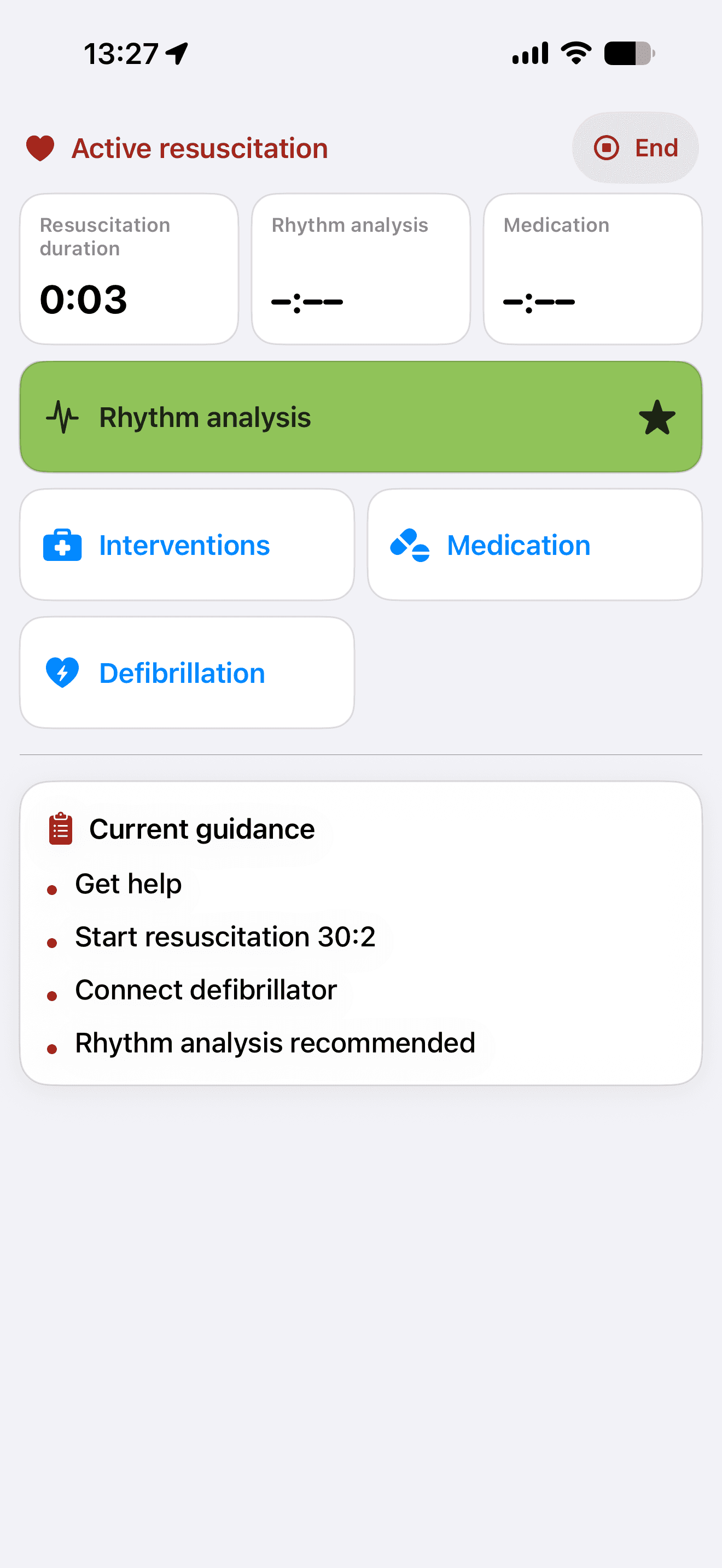
Hands On Heart combines concise reference material with an interactive practice flow, helping you connect the “why” with the “what comes next.”
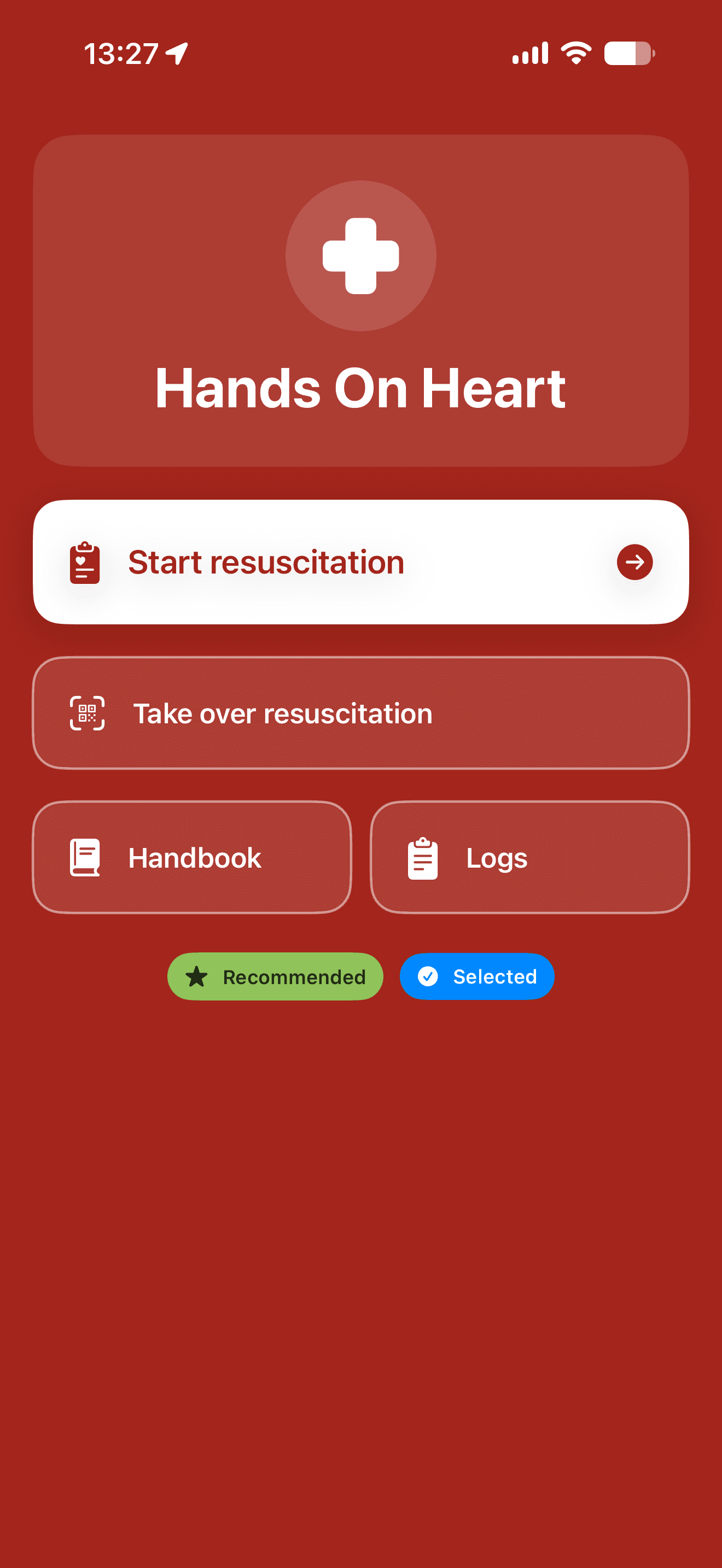
Start with scope, color language, and the structure of the algorithm.
Practice decisions, timing, rhythm pathways, and interventions.
Review the saved timeline and identify what deserves another pass.
Privacy is part of the product
Hands On Heart is designed without accounts, advertising, or behavioral tracking. The core learning experience works offline, and the developer does not collect your app data.
Read the Privacy PolicyWho it is for
A polished companion for structured study—not a replacement for certified education, supervised practice, or professional judgment.
Turn dense algorithm diagrams into a flow you can revisit and understand.
Refresh the sequence and vocabulary around structured ACLS scenarios.
Use a shared visual language to support discussion and deliberate practice.
Before you download
Need more help? Email us at support@handsonheart.app.
No. Hands On Heart is an educational tool only. It is not an emergency-response system and must not replace calling local emergency services, seeking a doctor, following institutional protocols, or relying on appropriately trained professionals.
No. The app is designed to support learning and refreshers. It does not provide certification and does not replace accredited training, supervised practice, professional judgment, or medical advice.
Hands On Heart is built for medical students, healthcare learners, clinicians refreshing their knowledge, and anyone studying structured resuscitation concepts with appropriate professional context.
Yes. The core app experience is designed to work offline, so your learning materials and practice flow remain available on your device.
The app does not require an account and the developer does not collect app data. Practice records remain on your device unless you choose to remove them. See the Privacy Policy for full details.
No. Hands On Heart is offered as a one-time paid download. Exact pricing and availability can vary by storefront and region.

A serious tool for serious learning
Download Hands On Heart for guided ACLS learning on iPhone and Android. One purchase. No subscription. No account.
One-time purchase · Price varies by region
Educational purposes only. Not for use as an emergency-response tool. Always contact local emergency services in a medical emergency.
Important: Hands On Heart does not provide medical advice, diagnosis, treatment, certification, or emergency services. Information may not be complete, current, or suitable for a specific situation. Always follow recognized training, local protocols, and the direction of qualified medical professionals.